At your service in Chandler
Standby Generator Installation Chandler AZ
- Permit paperwork handled for you
- HOA approval sorted before install
- Serving Chandler & Gilbert homes
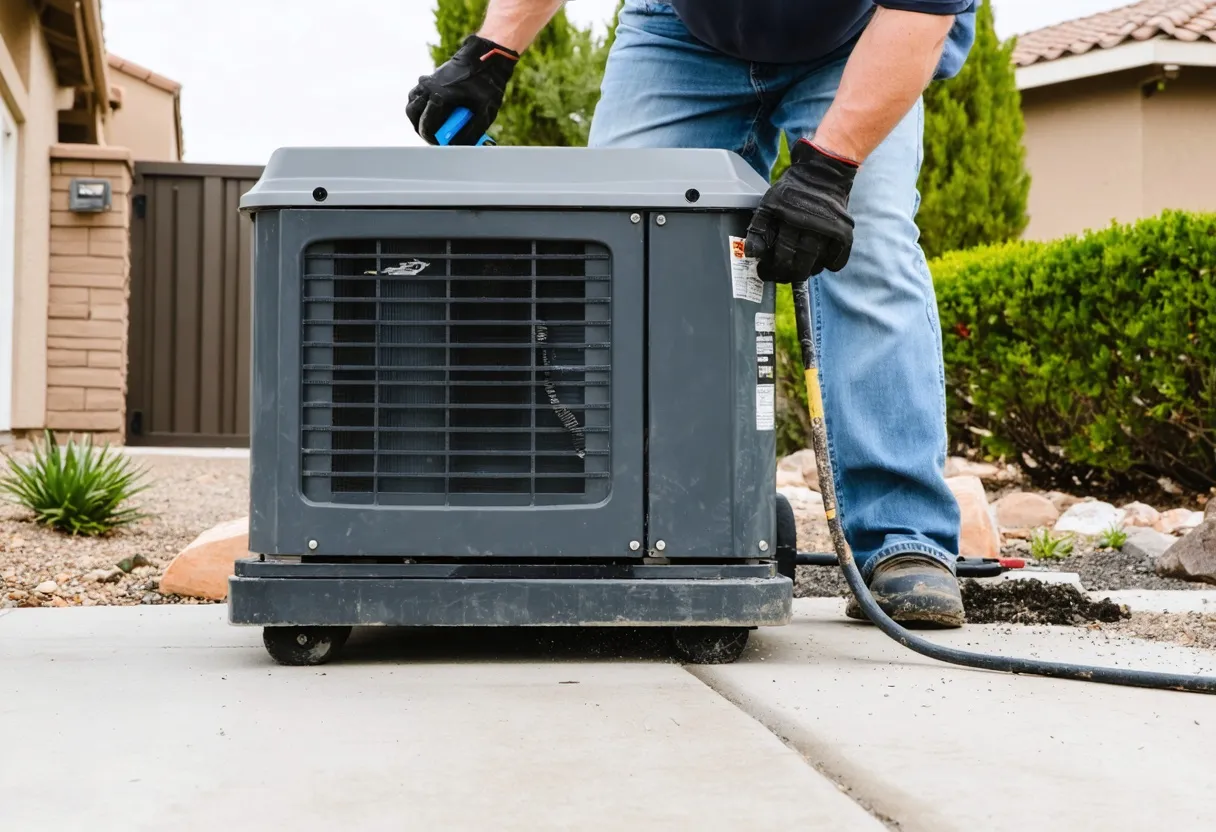
When monsoon storms push across the Chandler-Gilbert corridor and drop power along Loop 202, what actually determines whether a given house stays lit isn't decided in the moment the wind picks up — it's decided months earlier, at the city permit counter and inside an HOA architectural review packet. Chandler's Generator Permit process, combined with the design-review requirements built into many of the city's planned communities, is where a straightforward automatic standby generator installation most commonly stalls: equipment sitting wired and ready in a driveway or side yard, waiting on paperwork that nobody sequenced correctly. Homeowners across 85286, 85249, 85248, 85226, 85225, and 85224 tend to find this out the hard way, usually after an installer has already poured the pad and run the wiring before either approval has cleared.
Generator Installation Chandler was built around closing that specific gap rather than around the mechanical install alone. The Chandler Generator Permit application, the HOA architectural submittal, and the physical work of setting the unit and wiring the transfer switch are planned as one sequenced project from the first site visit — not three separate errands a homeowner has to manage on their own timeline. That matters most in the neighborhoods where HOA sign-off is a real prerequisite, not a formality, and where a missed submission window can push an install back a full review cycle.
What follows on this page is a plain look at how that process actually runs for a Chandler property, why the Chandler-Gilbert monsoon corridor makes standby power a different calculation than it is in milder climates, how brand and fuel tiers compare once the paperwork is out of the way, and what a realistic install timeline looks like when permitting and HOA approval are handled end-to-end instead of left to chase down mid-project.
How a Permitted Standby Install Actually Moves Through the City and Your HOA
A technician walks the property, checks the existing electrical panel and service size, and calculates the load a backup power system installation needs to cover — factoring in Chandler's summer air-conditioning draw — before recommending an air-cooled or liquid-cooled fuel tier and generator size.
The permit package required for Chandler's Generator Permit — equipment specifications, setback measurements, and a siting plan showing exactly where the unit and transfer switch will sit relative to the home and property line — is assembled and filed with the city before any equipment goes in the ground.
For a property inside a Chandler HOA, the same equipment cut sheets and siting plan are reformatted to that community's architectural submission standard and tracked against its own meeting or review schedule, so the HOA process runs alongside the city permit instead of waiting for it to finish first.
Once the city permit and the HOA architectural approval have both cleared, the generator and automatic transfer switch are physically installed, the required city inspection is scheduled and attended as part of the job, and the system is tested under load before being handed over ready for the next outage.
Why the Chandler-Gilbert Monsoon Corridor Changes the Backup Power Math
Chandler sits inside the stretch of the East Valley that utility crews and emergency managers refer to informally as the Chandler-Gilbert monsoon corridor — the area where late-summer storm cells reliably produce the dust, wind gusts, and lightning strikes that trip distribution lines serving neighborhoods on both sides of the Chandler and Gilbert border. For households in 85286, 85249, 85248, 85226, 85225, and 85224, that pattern means outages tend to cluster in a predictable window each year rather than arriving as a rare, one-off event, and it's a large part of why an automatic standby generator installation gets sized differently here than it would in a climate without a defined monsoon season.
Grid stress builds before the storms even arrive
Arizona's summer cooling load already pushes the local grid close to capacity before a single storm cell forms over the corridor, which means a Chandler standby system has to account for two overlapping conditions: the short, hard interruptions a monsoon cell causes when it knocks out a line, and the longer restoration windows that can follow when storm damage is spread across several neighborhoods at once. A system sized only for a brief blip can leave a home without air conditioning during exactly the stretch of the year that matters most for anyone with young children, older residents, or medical equipment in the house.
Chandler and Gilbert share more than a border
Because Chandler and Gilbert share overlapping utility infrastructure along their common boundary, a property just inside one city's limits can see the same outage timing as a home a few streets away in the other. That's one reason backup power system installation planning on this page treats Chandler and Gilbert as a single practical service area for scheduling and site visits, even though the permit and, where applicable, HOA approval are always filed against the correct jurisdiction for the actual address.
None of this changes what the city permit or an HOA architectural committee requires — it just means the sizing conversation for a Chandler home starts from the assumption that an outage could last long enough to matter, rather than treating standby power as a rarely-used convenience.
What's Actually Included When Permit and HOA Work Is Handled for You
One Point of Contact Across the Permit Counter, the HOA Desk, and Your Panel
Chandler zip codes 85286, 85249, 85248, 85226, 85225, and 85224 are served directly, including streets that share utility infrastructure with neighboring Gilbert addresses. Every permit and HOA submittal is tracked against the correct address and jurisdiction from the start, so paperwork is never filed with the wrong city or the wrong community association.
Standby Generator Installation Questions Chandler Homeowners Actually Ask
Does a standby generator installed in Chandler actually require a city permit?
Yes. The City of Chandler requires a Generator Permit for any permanently installed standby system, and the application covers equipment siting, required setback distances from property lines and structures, and the electrical connection details before installation can move forward.
If my HOA already reviews exterior changes, do I still need the separate city permit?
Both are required, and they're separate processes. HOA architectural review addresses how the equipment looks and where it sits within your community's design standards; the Chandler Generator Permit addresses code compliance and electrical safety. A compliant installation needs approval from both, ideally prepared together rather than sequentially.
How is a standby system different from just running a portable generator during a monsoon outage?
A standby system is permanently wired to an automatic transfer switch and starts on its own within moments of the Chandler-Gilbert corridor losing power. A portable unit has to be positioned outdoors, fueled, and manually connected to specific circuits after the outage has already started, which matters most overnight or when nobody is home.
Should a Chandler property run a generator on natural gas or propane?
A home with an existing natural gas line typically runs its standby generator on natural gas, since the fuel supply doesn't run out mid-outage. A property without gas service is sized against a propane tank tier instead, and tank placement can be subject to setback rules from both the city and an HOA. The site visit confirms which fuel path applies to your address.
Will my electrical panel need work before a generator can be added?
Some Chandler homes need panel or subpanel adjustments to safely accommodate the automatic transfer switch. That's confirmed during the load assessment against your specific panel and service size, not assumed before anyone has actually looked at it.
How long does the whole process take once the city and HOA are both involved?
Timelines vary by property and by how quickly a specific HOA's architectural committee meets, since some review on a fixed monthly schedule rather than on demand. Running the city permit and the HOA submittal in parallel from the first site visit is what keeps the overall timeline from being extended by one approval waiting on the other.
Comparing Generator Brands and Fuel Tiers Before You Commit
Not every standby generator sized for a Chandler home fits the same brand or fuel tier, and getting that comparison right before equipment is ordered avoids the more expensive problem of resizing or reordering mid-project. The right combination depends on the home's panel, the fuel source actually available at the property, and what a given HOA architectural committee will approve for placement, enclosure, and sound.
Air-cooled vs. liquid-cooled tiers
Smaller residential systems are typically air-cooled and sized to cover essential circuits — refrigeration, well or sump pumps, core HVAC components, and a defined set of outlets — during a monsoon-driven outage. Larger liquid-cooled systems are sized to carry more of a home's total electrical load at once, which matters for Chandler households running air conditioning across multiple zones through a full summer outage rather than just a few hours. Which tier is appropriate gets decided at the load assessment against the home's actual panel, not assumed from square footage alone.
Natural gas vs. propane
A property with an existing natural gas connection generally runs its standby generator on natural gas, since the supply line doesn't run dry partway through an extended outage the way a portable tank can. A property without gas service is sized against a propane tank instead, and where that tank sits on the property is sometimes subject to HOA setback and screening rules in addition to whatever the city permit requires. Either fuel path gets folded into the same permit and HOA submission package rather than triggering a second, separate round of approvals later.
What actually varies between brands
Beyond fuel type, brand and model differences that matter for a Chandler install tend to come down to physical footprint, enclosure sound rating, and available capacity tiers — all of which are exactly the specification details that get attached to both the Chandler Generator Permit application and the HOA architectural packet. That overlap is deliberate: a generator's spec sheet is the same document a city reviewer checks for code compliance and an HOA committee checks for site-plan and appearance approval, which is one more reason the brand and fuel comparison is handled as a single step alongside the paperwork rather than as two separate conversations happening on two different timelines.
Get Your Free Quote
Tell us about your property and we'll lay out the permit, HOA, and install plan — no obligation.
Ready to Get Cleared for Installation?
Start with a free quote and we'll map the permit and HOA steps specific to your property.